Saturday, 16 February 2013

Where You At? Ask Your Phone, Not Your Friend


Right Now, only a handful of devices sport GPS service. In the near future, it will be the norm.
GPS is taking off, as phone makers, carriers, and service providers have realized that consumers generally have no idea where they are, ever. A location-based service (LBS) takes raw GPS data that pinpoints your location and enhances this information with additional services, from suggesting nearby restaurants to specifying the whereabouts of your friends.
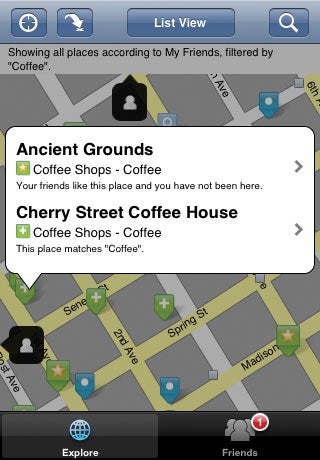
What is it? LBS was originally envisioned as simply using old-school cell-phone signal triangulation to locate users' whereabouts, but as the chips become more common and more sophisticated, GPS is proving to be not only handy and accurate but also the basis for new services. Many startups have formed around location-based services. Want a date? Never mind who's compatible; who's nearby? MeetMoi can find them. Need to get a dozen people all in one place? Both Whrrl and uLocate's Buddy Beacon tell you where your friends are in real time.

Cell Phones Are the New Paper


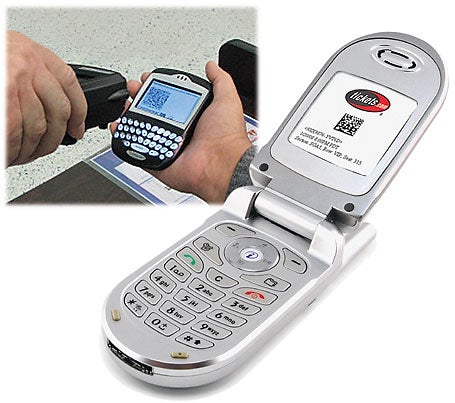
Next Year, you can drop paper boarding passes and event tickets and just flash your phone at the gate.
Log in to your airline's Web site. Check in. Print out your boarding pass. Hope you don't lose it. Hand the crumpled pass to a TSA security agent and pray you don't get pulled aside for a pat-down search. When you're ready to fly home, wait in line at the airport because you lacked access to a printer in your hotel room. Can't we come up with a better way?
What is it? The idea of the paperless office has been with us since Bill Gates was in short pants, but no matter how sophisticated your OS or your use of digital files in lieu of printouts might be, they're of no help once you leave your desk. People need printouts of maps, receipts, and instructions when a computer just isn't convenient. PDAs failed to fill that need, so coming to the rescue are their replacements: cell phones.

Your Fingers Do Even More Walking


Last year Microsoft introduced Surface, a table with a built-in monitor and touch screen; many industry watchers have seen it as a bellwether for touch-sensitive computing embedded into every device imaginable. Surface is a neat trick, but the reality of touch devices may be driven by something entirely different and more accessible: the Apple iPhone.
What is it? With the iPhone, "multitouch" technology (which lets you use more than one finger to perform specific actions) reinvented what we knew about the humble touchpad. Tracing a single finger on most touchpads looks positively simian next to some of the tricks you can do with two or more digits. Since the iPhone's launch, multitouch has found its way into numerous mainstream devices, including the Asus Eee PC 900 and a Dell Latitude tablet PC. Now all eyes are turned back

Use Any Phone on Any Wireless Network


Curtains for DRM


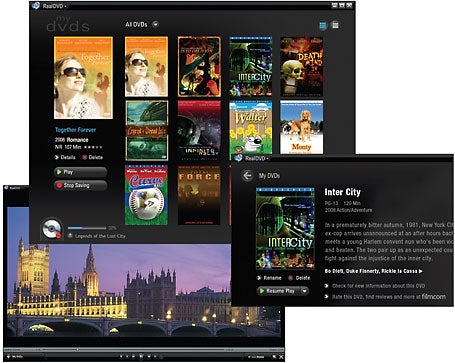
RealDVD's DRM-free format makes taking flicks on the road easier. This is the future of entertainment.
Petrified of piracy, Hollywood has long relied on technical means to keep copies of its output from making the rounds on peer-to-peer networks. It hasn't worked: Tools to bypass DRM on just about any kind of media are readily available, and feature films often hit BitTorrent even before they appear in theaters. Unfortunately for law-abiding citizens, DRM is less a deterrent to piracy than a nuisance that gets in the way of enjoying legally obtained content on more than one device.
What is it? It's not what it is, it's what it isn't--axing DRM means no more schemes to prevent you from moving audio or video from one form of media to another. The most ardent DRM critics dream of a day when you'll be able to take a DVD, pop it in a computer, and end up with a compressed video file that will play on any device in your arsenal. Better yet, you won't need that DVD at all: You'll be able to pay a few bucks for an unprotected, downloadable version of the movie that you can redownload any time you wish.

Radical Simplification Hits the TV Business


What is it? Who can forget CableCard, a technology that was supposed to streamline home A/V installations but that ultimately went nowhere despite immense coverage and hype? CableCard just didn't do enough--and what it managed to do, it didn't do very well. Enter Tru2way.
Tru2way is a set of services and standards designed to pick up the pieces of CableCard's failure by upgrading what that earlier standard could do (including support for two-way communications features like programming guides and pay-per-view, which CableCard TVs couldn't handle), and by offering better compatibility, improved stability, and support for dual-tuner applications right out of the